
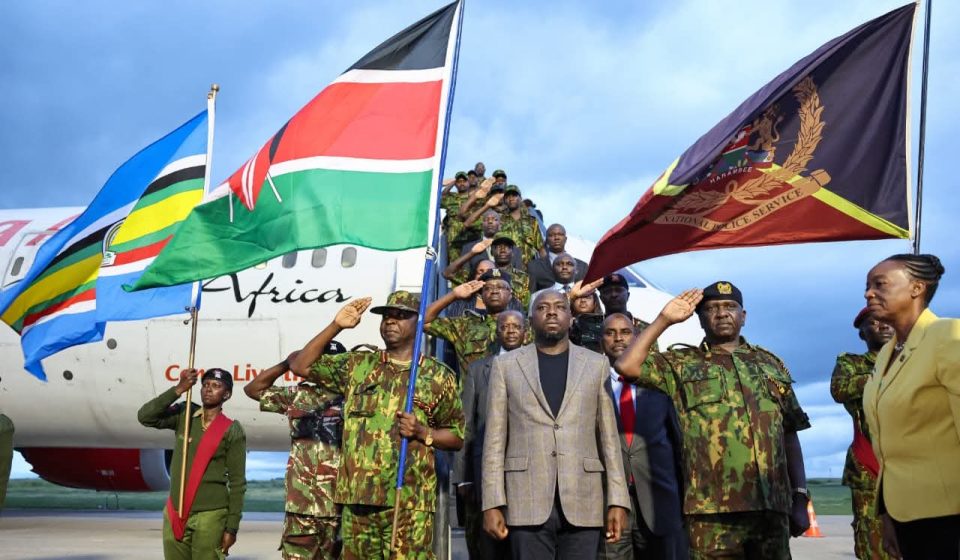
“It was a joyful occasion this evening to land on home soil with the last contingent of 150 officers who made this success possible. We cannot be more proud of their achievements as a country,” – Interior Security CS Kipchumba Murkomen.
The Kenyan government has defended as a resounding success the Haiti Security Mission saying it had helped restore order in critical areas even as critics dismiss it as a failed foreign policy project.
While receiving the last contigent of 150 officers returning home, Internal Security Cabinet Secretary Kipchumba Murkomen said the officers helped secure secured critical infrastructure, including the airport, seaport, and major transport corridors.
He said that the Kenyan officers working under the UN-backed Multinational Security Support mission also helped restore state presence in previously inaccessible areas and supported the reopening of schools, hospitals, and businesses.
“At the outset, the security landscape was challenging and fluid. Today, they returned home with pride and a great sense of achievement for having helped to turn the situation around,” said a happy CS Murkomen.
He said over the course of the Mission, 730 Kenyan officers served in the country, working with the Haitian National Police and other MSS Officers, to turn the security situation around. When the Haitian’s learnt that the Kenyan officers were leaving there was near commotion as they tried to block their departure saying they had helped restore order in the gang ravaged country.
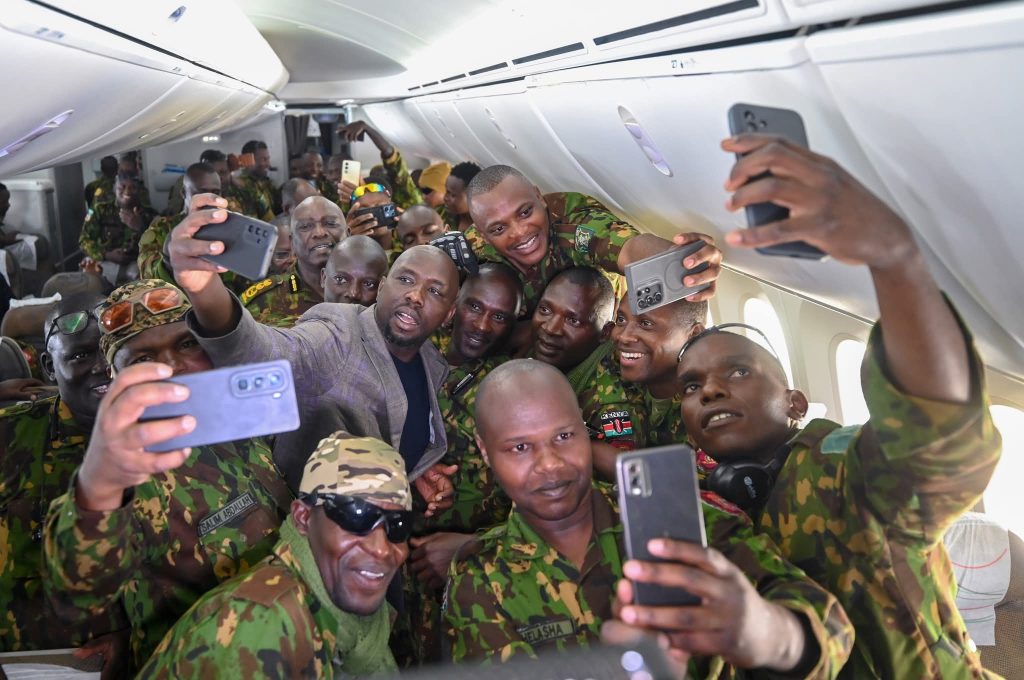
But critics did not waste time to downplay the success of the mission with some describing the Kenya-Haiti mission one of the biggest foreign policy failures and public relations disasters no one wants to talk about.
They say the mission was sold to Kenyans with the aim of retaking gang-controlled areas, secure key infrastructure (ports, roads, hospitals, airports), protect civilians and humanitarian corridors, strengthen the Haitian police and create conditions for elections.
At the end of the mission, they noted that today, gangs still control most of Port-au-Prince, and large parts of the country remain unstable.
The critics however admit that there were some “limited gains” like preventing the total collapse of some state functions, control of parts of the airport zone, joint patrols with Haitian police and protection of some government facilities
