
By Joseph Mathenge
Nairobi, Kenya — Political tensions in Kenya escalated sharply on Monday as senior opposition leaders accused the government of undermining civil liberties and using excessive force against demonstrators, raising concerns over the state of democracy ahead of the next general election.
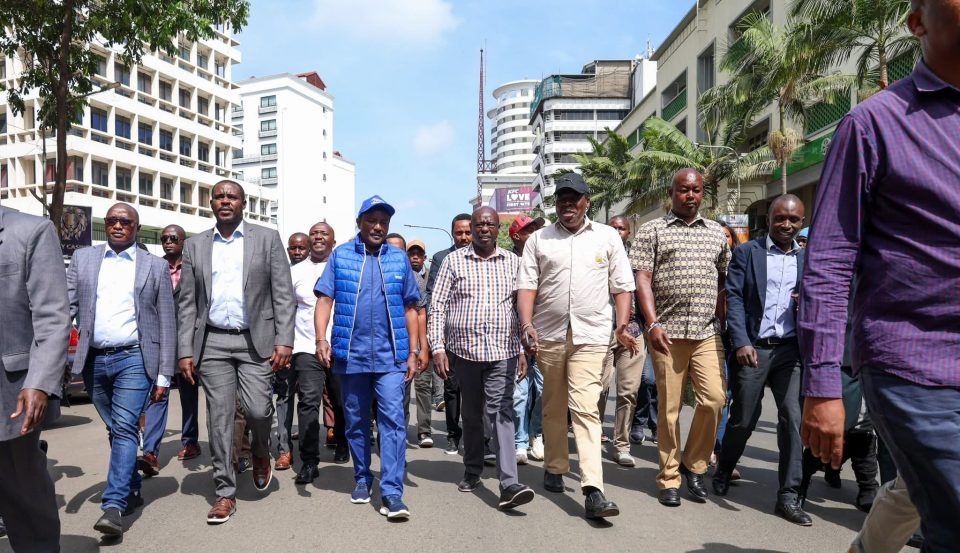
Speaking from the rooftops of vehicles in Nairobi’s bustling Central Business District, opposition leader Kalonzo Musyoka defended the right of political leaders to address citizens and hold public meetings without intimidation.
Musyoka referenced the country’s constitutional framework, introduced during the presidency of Mwai Kibaki, emphasizing that freedom of assembly and expression remain foundational rights.
“No one should threaten Kenyans for holding peaceful demonstrations or public meetings. Kenya must remain a democracy. The right to assemble and the right to hold an opinion are constitutional freedoms,” Musyoka said.
He noted that opposition leaders had formally submitted letters to the police and presidency raising concerns over security conduct, copies of which were also sent to international bodies, including the International Criminal Court.
Musyoka warned that continued violence against civilians could prompt international legal scrutiny.
Police teargas disrupt downtown rally
The warning came as police fired teargas at a rally led by Musyoka and former deputy president Rigathi Gachagua in downtown Nairobi, triggering chaos and forcing supporters to flee.
The rally, held near the Tea Room area along River Road and Nyamakima, had drawn a sizeable crowd eager to hear leaders address political and governance issues. Tension escalated shortly after Musyoka began introducing Wiper Party members accompanying him to the event.
Eyewitnesses and online videos show the situation changed abruptly moments after a party aspirant concluded remarks, with thick clouds of teargas spreading across the area.
Supporters scattered through the streets as smoke engulfed the CBD, disrupting businesses and traffic. Gachagua and other opposition leaders were hurriedly escorted away as security officers sought to contain the situation.
The rally had taken place shortly after the leaders visited the office of Douglas Kanja to raise concerns over alleged police brutality — a matter that has intensified political friction.
Authorities had not immediately issued a comprehensive statement, though calm gradually returned to the affected sections of the city centre.
Opposition demands accountability
Gachagua called on supporters to accompany opposition leaders to the national police headquarters to demand answers from Kanja.
He alleged that police had targeted churches and public gatherings and accused Interior Minister Kipchumba Murkomen of authorizing crackdowns on opposition activities, including a recent rally in Kitengela attended by lawmakers Edwin Sifuna and Babu Owino.
Gachagua also criticized Nairobi County leadership, accusing Governor Johnson Sakaja of harassing residents, and said opposition parties were working to field a single presidential candidate against President William Ruto in the next election, naming key figures including Fred Matiang’i, Martha Karua, and Justin Muturi.
Meanwhile, opposition leader Eugene Wamalwa criticized a reported government plan to reopen the Kenya–Somalia border, warning that security risks related to Al-Shabaab could threaten civilians.
He accused the government of prioritizing political advantage over public safety and warned senior police officials they could be held personally accountable for alleged abuses against civilians, including women and children, during demonstrations.
Rising political tensions
Monday’s events highlight the growing friction in East Africa’s largest economy, as the opposition intensifies its campaign against President Ruto’s administration.
The government has defended police operations as necessary to maintain order, while rights groups continue to call for independent investigations into protest-related deaths.
As Kenya approaches its next nationwide vote, the confrontation underscores a volatile political climate, with debates over civil liberties, security, and democratic space taking center stage.
